Pfalz: Where Riesling Speaks in Many Voices
June 24, 2026
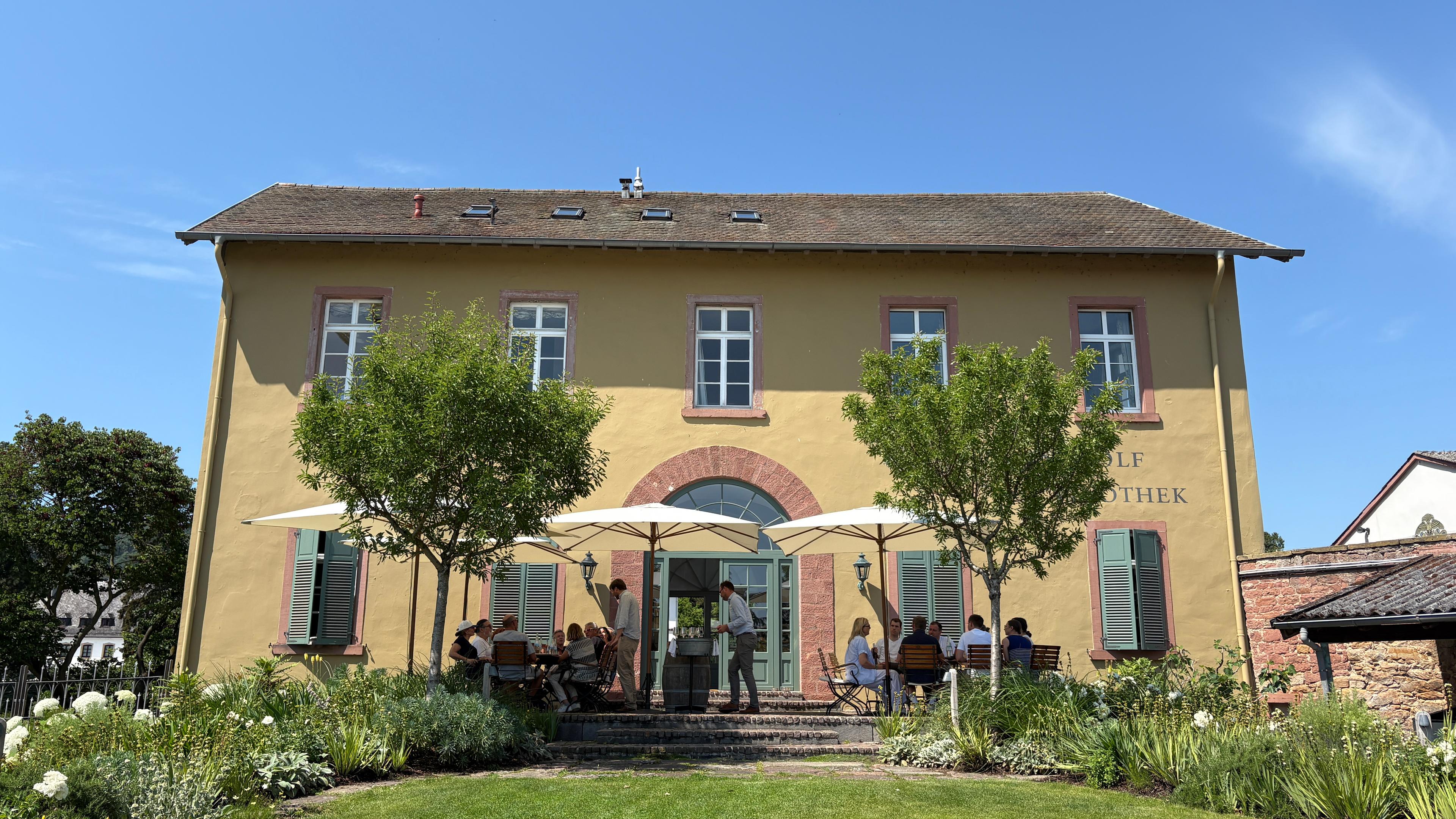
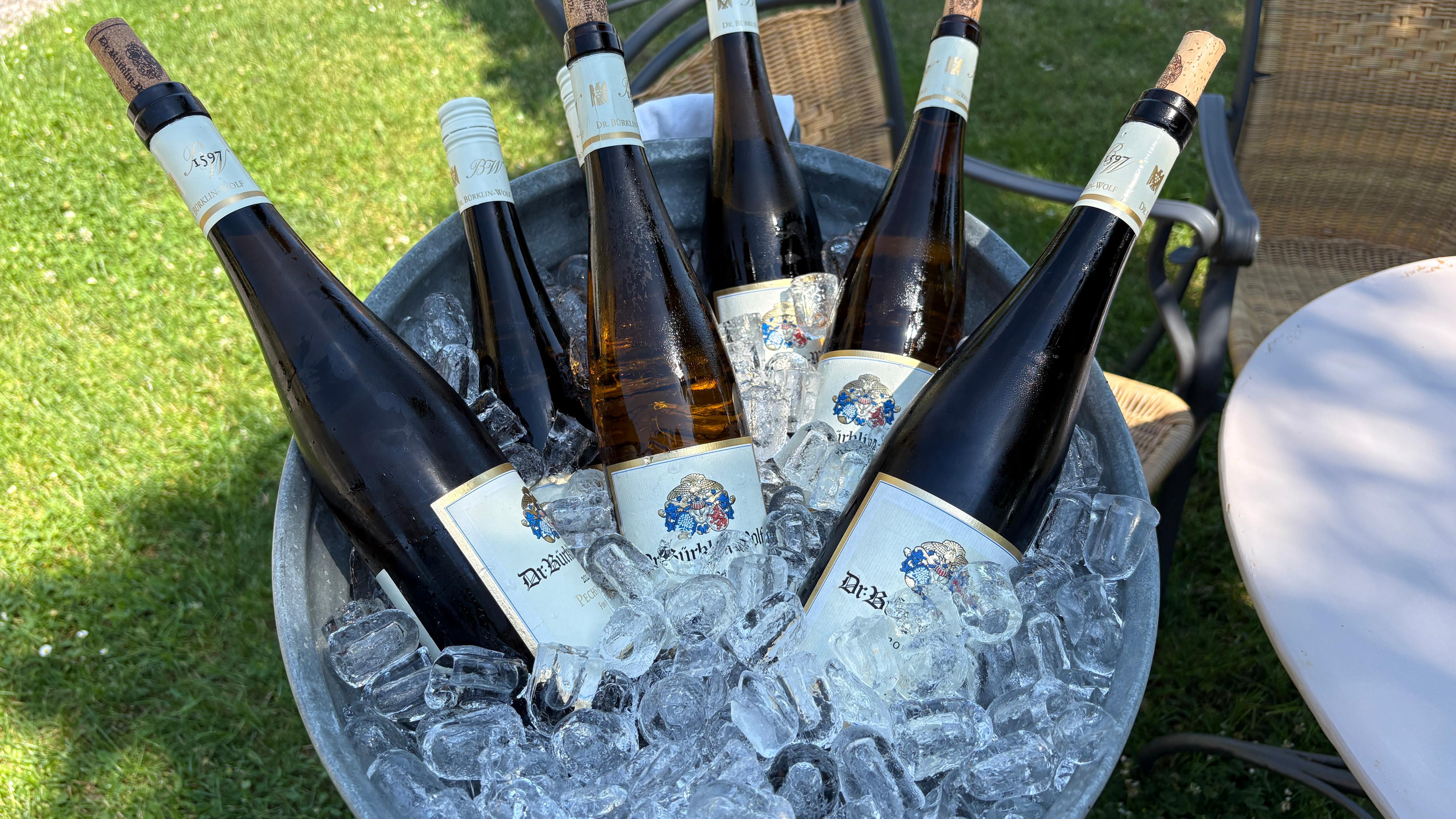
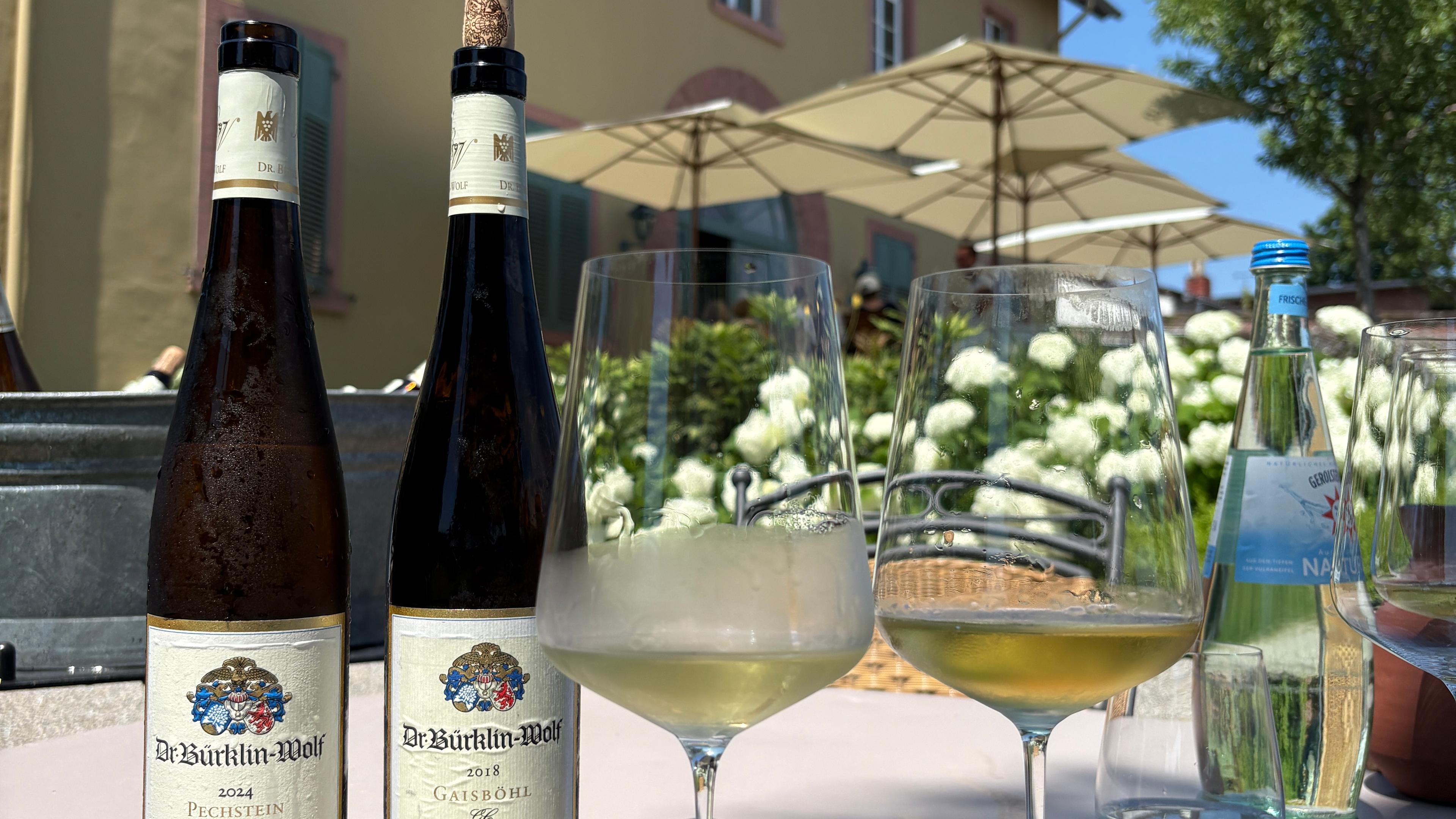
In this article, I travel to Pfalz, one of Germany’s most fascinating wine regions, to explore why its wines resist easy definitions and cannot be reduced to a single style. Conversations with Philipp Azores of Dr. Bürklin-Wolf and the team at Dr. von Bassermann-Jordan became an opportunity to look beyond great Rieslings and talk about the influence of soils, biodynamics, history and the people behind the wines. From the volcanic vineyards of Forst to the limestone slopes around Wachenheim, and from precise Grand Cru Rieslings to unexpected expressions of Sauvignon Blanc and Pinot Gris, this is a story about the remarkable diversity of Pfalz and why every wine lover is likely to find something here to fall in love with.
There are wine regions that are easy to describe, and then there are places that reveal themselves gradually, refusing to fit into simple definitions. Pfalz belongs very much to the latter category. On paper, the facts are straightforward enough: one of Germany’s largest wine regions, blessed with one of the country’s warmest climates, sheltered by the Haardt Mountains and celebrated above all for Riesling. Yet spending even a few days among the vineyards around Wachenheim, Forst, Deidesheim and Ruppertsberg quickly makes you realise that these facts, while perfectly accurate, tell only a small part of the story.
What makes Pfalz so compelling is not that it produces great Riesling. Many places do. What makes it special is the extraordinary diversity hidden behind a name that is too often treated as if it represented a single style. In reality, Rieslings from Pfalz can be broad and generous or strict and almost severe, shaped by limestone, sandstone, basalt and countless subtle differences in exposure, elevation and age of the vines. Add to this a growing confidence in Chardonnay, Pinot Blanc, Pinot Gris, Sauvignon Blanc and Spätburgunder, and it becomes clear that Pfalz is no longer simply one of Germany’s great wine regions. It is one of Europe’s most fascinating.
During my recent visit, I had the pleasure of spending time with two historic estates that, despite sharing geography and history, express the region in completely different ways. At Dr. Bürklin-Wolf, I spent several hours with Philipp Azores, whose enthusiasm for the estate and its philosophy proved every bit as compelling as the wines themselves. I also had the opportunity to discover the wines of Dr. von Bassermann-Jordan, another of the great names of the Mittelhaardt, whose approach highlights yet another face of Pfalz. Together, these experiences offered perhaps the best possible introduction to a region whose greatest strength lies precisely in its diversity.
Germany itself presents a remarkable mosaic of wine styles. Mosel is synonymous with slate and precision, Rheingau with structure and nobility, Nahe with geological complexity, and Baden with a more Burgundian spirit. Pfalz occupies a unique position among them. Protected from harsh weather by the Haardt Mountains, which form the eastern edge of the Palatinate Forest, the region enjoys one of the sunniest and driest climates in the country. Fig trees, almonds and lavender are not unusual here, and there are moments when one could almost forget that this is Germany at all. There is a certain Mediterranean ease to the landscape, to the villages and, perhaps most importantly, to the wines.
Yet warmth alone does not explain the character of Pfalz. What truly distinguishes the region is the remarkable diversity beneath the surface. Limestone, coloured sandstone, loess, clay, gravel and volcanic basalt are all found here, often within short distances of one another. It is this geological complexity that allows the same grape variety to express itself in such dramatically different ways.
No one explained this better than Philipp Azores during our conversations at Dr. Bürklin-Wolf.
One of the first things he said to me was that, contrary to popular belief, the wines are not really made in the cellar. In his view, and in the philosophy of the estate, everything that defines the wine happens outside, among the vines. The cellar simply accompanies what nature and careful farming have already created.
Founded in Wachenheim, Dr. Bürklin-Wolf is one of Germany’s most historic estates and one of the pioneers of biodynamic viticulture. Under the leadership of Bettina Bürklin-von Guradze, the estate began its conversion in the mid-1990s, completing the process in 2005. Today, with more than twenty years of experience working biodynamically, the philosophy has become so deeply integrated into the estate that it no longer feels like a separate approach, but rather the natural way of doing things.
What struck me most was how practical Philipp’s understanding of biodynamics was. There was no mysticism, no attempt to romanticise the process. Instead, he spoke about soil as a living ecosystem rather than simply a medium into which nutrients are added. Bacteria, fungi, humus, roots and mineral components all interact in ways that allow the vine to express its environment more faithfully. According to him, one of the biggest differences they noticed after converting was the increase in aromatic complexity and the clearer expression of individual vineyard personalities.
Before biodynamics, those differences existed, of course, but they were less obvious in the finished wines. Today, each vineyard speaks with far greater precision, and that precision has become one of the defining characteristics of the estate.
Interestingly, this philosophy is reflected in the cellar itself, where the approach remains remarkably conservative. There are no amphorae, no experimental vessels and very little intervention. Fermentations are spontaneous, ageing takes place largely in large old oak casks and stainless steel, and everything is designed to preserve rather than shape the personality of the wines.
Equally fascinating is the role played by Nicola Libelli, the estate’s cellar master and technical director. Philipp explained that in many wineries, vineyard and cellar operate almost independently, but at Bürklin-Wolf, the person responsible for the wines ultimately guides what happens in the vineyard as well. Harvest decisions, canopy management and countless other choices throughout the growing season are all made with the final wine in mind.
As Philipp put it, the conversation never really ends. Each year brings new questions, new challenges and new opportunities to refine the personality of each individual parcel. The goal is always greater precision, greater clarity and a deeper expression of place.
This philosophy also explains why Dr. Bürklin-Wolf adopted a Burgundian approach to classification long before German wine law recognised it. Instead of focusing on ripeness levels, Bettina Bürklin-von Guradze chose to organise the wines according to terroir, introducing Premier Cru and Grand Cru classifications inspired by Burgundy. Because German regulations at the time did not officially permit these terms, the estate adopted the abbreviations P.C. and G.C., which remain proudly displayed on the labels to this day.
One of the most memorable moments of the visit came while tasting through a series of wines that perfectly illustrated how dramatically Riesling can change depending on its origin. Even before reaching the Grand Crus, I was struck by the village wines, whose balance, purity and remarkable value make them some of the estate’s most compelling bottles. Philipp remarked that a great estate should always be judged by the quality of its entry-level wines, and I found it difficult to disagree.
Among the wines that left the deepest impression on me, however, two stood out above all others.
Dr. Bürklin-Wolf Pechstein G.C. 2024 is often described as one of the icons of German Riesling, and after tasting it, the reputation makes perfect sense. The volcanic basalt soils of Forst give the wine an almost electric tension and a striking mineral precision. It is not a wine that immediately seeks to charm or seduce. Rather, it invites patience and rewards attention, revealing layers of citrus, herbs and crushed stone wrapped around a structure that feels almost architectural. Philipp jokingly described it as a wine for Riesling fanatics, and I understood exactly what he meant.
If Pechstein represented discipline and precision, Gaisböhl G.C. Monopol 2018 revealed an entirely different personality. Owned exclusively by the estate, this monopole vineyard in Ruppertsberg produced one of the most captivating wines I encountered during the trip. The complexity was astonishing. Ripe stone fruits, dried apricots, pomelo, green tea, delicate herbal nuances and subtle caramel notes seemed to evolve continuously in the glass. At one point, trying to describe what I was experiencing, I found myself speaking about Mediterranean herbs and the aromas one encounters walking near the sea in southern Europe. Philipp smiled and replied that many of those same herbs actually grow around the vineyards here in Pfalz.
And somehow, that answer captured the spirit of the region perfectly.
If Dr. Bürklin-Wolf showed me one side of Pfalz, Dr. von Bassermann-Jordan revealed another. Founded in 1718 and deeply intertwined with the history of German wine, the estate has always been associated with great Riesling, yet what impressed me most during this visit was not simply the quality of the wines themselves, but the confidence with which the winery explores varieties beyond Riesling without ever losing sight of its identity.
Perhaps this is one of the reasons Pfalz feels so exciting today. Riesling may remain the undisputed king of the region, but it no longer stands alone. Chardonnay, Weissburgunder, Grauburgunder and Sauvignon Blanc are no longer side projects or secondary varieties. In the right hands, they have become wines with their own voice and personality.
One of my most enjoyable discoveries was Bassermann-Jordan Sauvignon Blanc Tonel 2022. German Sauvignon Blanc can still surprise people who instinctively associate the variety with either New Zealand or the Loire Valley, yet Pfalz has quietly become one of the country’s most important homes for the grape. What I loved about this wine was precisely that it didn’t seem interested in imitating anyone. It avoided the exaggerated tropical character of New Zealand while also steering clear of the sharp austerity that can sometimes dominate Sancerre. Instead, it offered a beautifully balanced expression with texture, freshness and depth, showing that Sauvignon Blanc can speak German with a very convincing accent of its own.
Equally memorable was Weissburgunder Oval 2024, a wine that immediately reminded me why Pinot Blanc deserves far more attention than it usually receives. Fermented and aged in concrete eggs, it combines remarkable purity with a gentle creaminess and texture that never overwhelms its freshness. Lime zest, grapefruit and juicy orchard fruits unfold naturally in the glass, while a subtle roundness on the palate gives the wine an elegance that feels effortless rather than constructed. It is the sort of bottle that seems destined for long lunches, grilled fish, asparagus and simple Mediterranean dishes where freshness and precision matter more than power.
Then there was Grauer Burgunder Orange 2023, perhaps the most unexpected wine of the entire lineup. Orange wines have become fashionable, sometimes excessively so, and it is easy to approach them with a degree of scepticism. Yet this bottle never felt like a statement designed to follow a trend. Instead, it seemed like a thoughtful reinterpretation of a familiar grape. The gentle tannic grip, the texture derived from skin contact and the beautiful balance between freshness and structure transformed Grauburgunder into something entirely different while preserving its identity. It was distinctive without being eccentric and complex without trying too hard to impress.
During my conversation with Philipp Azores, one sentence stayed with me long after I had left Wachenheim. He said that their mission at Dr. Bürklin-Wolf is to demonstrate how the same grape variety, grown in the same vintage and vinified according to the same philosophy, can produce completely different wines simply because it comes from a different place. The more I thought about this idea, the more I realised that it captures the essence of Pfalz better than any technical description ever could.
What makes this region so fascinating is not the pursuit of one ideal style, but rather the extraordinary diversity that emerges from its soils, exposures and traditions. Within a relatively small area, volcanic basalt gives rise to wines of striking tension and precision, while limestone produces expressions that are broader, more saline and almost tactile in texture. Some Rieslings reveal themselves immediately through generous fruit and accessibility, while others require patience and reward those willing to spend time with them. It is precisely this range that makes Pfalz so captivating, because there is no single answer to the question of what a Pfalz wine should taste like.
Perhaps that is why I left the region thinking about much more than Riesling alone. I found myself reflecting on the relationship between people and vineyards, on the patience required to work with nature rather than against it, and on the quiet confidence shared by producers who seem less interested in chasing trends than in expressing the identity of their sites as faithfully as possible. There is something deeply reassuring about this approach, especially in a world where so many wines increasingly resemble one another.
Among the wines that left the strongest impression on me, Dr. Bürklin-Wolf Pechstein G.C. 2024 stood out for its remarkable tension and almost electric mineral character, although it is certainly a wine that rewards patience and will continue to evolve beautifully over many years. Equally unforgettable was Gaisböhl G.C. Monopol 2018, a wine whose complexity, depth and sense of harmony made it one of the most moving Rieslings I have tasted in recent memory. Beyond Riesling, Bassermann-Jordan Sauvignon Blanc Tonel 2022 offered a wonderfully balanced interpretation of the variety that avoids imitation and speaks confidently with its own voice, while Weissburgunder Oval 2024 demonstrated just how elegant and gastronomic Pinot Blanc can be when texture and freshness are perfectly balanced. Grauer Burgunder Orange 2023, meanwhile, served as a reminder that even familiar grape varieties can surprise us when approached with curiosity and restraint.
I arrived in Pfalz expecting to encounter some of Germany’s finest Rieslings, but I left with a much broader appreciation for what this region represents. More than anything, I left with the feeling that great wines are rarely about power or technique alone. They are about places, about people and about the countless small decisions made over many years that allow a vineyard to speak clearly.